
Inside the Making of a $60M SaaS
The journey of Epignosis to 12,000+ customers
This is Startup Pirate #131, a newsletter about startups, technology, and entrepreneurship, featuring news, jobs, and interviews with the most influential Greeks in tech. If you’re not a subscriber, click the button below:
Inside the Making of a $60M SaaS
This was one of my favourite guest interviews to date. I had the pleasure to chat with Thanos Papangelis, co-founder of Epignosis, a global e-learning software company generating over $60M in annual revenue. What started in 2003 as a side project between two Greek computer science graduates evolved — through multiple pivots, an open-source experiment, and a well-timed SaaS shift — into one of Greece’s most enduring B2B software success stories. We discussed the company’s journey over two decades and much more:
Turning an open-source project into a global SaaS product
The snowball effect of SaaS growth
Why it’s harder to kill something that kind of works than something that fails
Bootstrapping for years before raising from top-tier funds
Why ramen profitability still matters
Whether SaaS is actually threatened by AI
The founder vs professional CEO debate
Angel investing
Let’s get into it.
Alex: Take us back to the beginning. How did you and Dimitris Tsingos get Epignosis off the ground?
Thanos: We met in 2001. I had graduated in computer science from the University of Patras, and Dimitris from the University of Crete. He emailed alumni lists looking for potential co-founders, and that’s how we connected. We launched Epignosis in 2003 as a side project.
We started an online tutoring platform for Greek students preparing for university admission exams. Greek families were, and still are, spending heavily on private tutoring, and we wanted to democratise access. We tried to raise €1M (a big Seed check back then) but failed.
We dropped the idea but kept the technology. That platform became eFront (from e-Frontistirio, meaning electronic tutoring centre). We tried selling it to Greek universities and colleges, but it ended with little traction. E-learning sounded exotic to Greek institutions and in many ways still does.
So we pivoted again. We packaged eFront as open source and went global. Open source was our free go-to-market engine. It helped us build brand, credibility, and a developer community. By 2010, we were 7–8 people. Five developers, one salesperson. Barely profitable. We were generating €1M in revenue, mostly from services and premium features layered on top of open source, including two vertical editions: Educational and Enterprise.
Then in 2011, I went to DevLearn in Las Vegas. SaaS was everywhere. The wave was undeniable. I came back convinced we had to transform eFront into a SaaS product. Eleven months later, we launched TalentLMS.
Alex: Did you follow the typical product-led growth playbook: freemium, self-serve, all that?
Thanos: Completely. Self-serve, freemium, affordable. We didn’t even have a contact form at the beginning. No sales team. Just product and marketing to drive traffic. That model worked, but core product-led growth only gets you so far.
Over time, we built a 40-person sales team to handle larger inbound accounts and run some outbound. Pricing dictates sales strategy. If your product is cheap, you can’t afford expensive salespeople. The unit economics won’t work. The rule of thumb is that Customer Lifetime Value (LTV) should be 3x-4x your blended Customer Acquisition Cost (CAC). If you’re losing money with growth, that’s a problem. If you want heavy outbound and enterprise motion, you need enterprise pricing.
Product-market fit isn’t a formula. It’s timing, product, and team. We hit the right moment with the right model. SaaS accumulates energy slowly, what we call the “snowball effect.” We were growing 15–30% month-over-month. I remember being thrilled going from $1,000 to $1,300 to $1,500 in monthly revenue. People thought I was crazy. Fourteen years later, the snowball is still rolling.
Alex: Did you kill eFront and go all-in on TalentLMS?
Thanos: We didn’t — and maybe we should have. Internally, not everyone agreed on doubling down and questioned why build something new when the existing product was working. It’s psychologically hard to abandon something that “kind of works.” If it’s failing, it’s easy. If it’s generating €1M, it’s much harder.
Today, eFront generates €5.5–6M out of our €60M total revenue. TalentLMS makes the rest. At the time, though, we were choosing between €1M in revenue and a product making $1,000 per month. You never know how far the new thing will go. $1M? $5M? $10M? Nobody knows.
Alex: You stayed lean and bootstrapped for years before eventually raising capital from leading firms like Insight Partners.
Thanos: Even when eFront was doing €1M, I didn’t think we had a compelling VC story. TalentLMS was growing, but we were building through the Greek economic crisis. VC wasn’t even on our radar.
After 2015, investors started reaching out. They saw the signals: hiring, reviews, and traction. We didn’t need the money, as we were profitable. Yet we raised to accelerate growth and expand the product.
The tradeoff of staying bootstrapped was slower growth. Long term, I’m still not sure what’s better: move fast and risk breaking things, or move slower and maybe miss the opportunity. It’s a delicate balance.
Alex: The landscape is very different now. Competition is everywhere. More capital is available. What advice would you give founders today?
Thanos: Every founder has to answer that for themselves. Today, competing without capital is tough, unless you go extremely niche. But burning cash recklessly isn’t smart either. I see founders raise money and feel pressure to spend it. Not invest it; spend it. If you’re deeply loss-making, the clock is ticking, and next time you raise, you’ll have your back against the wall.
I believe companies should grow in a way that allows them to reach break-even if needed, what we call “ramen profitability.” Have two years of runway and work toward profitability. I’m also sceptical of endless funding rounds, Series A, B, C, D, etc. That model leads to heavy dilution for founders and chronic losses.
We’ve drifted from first principles. Companies are meant to generate profit. A few decades ago, it would have been unthinkable to run a business that permanently burns more cash than it makes.
The ideal scenario, I’d say, is break even quickly with minimal external capital injection. Can you build a billion-dollar company just with seed money?
Alex: Epignosis now generates around $60M in annual revenue. What does the company look like today, and what’s next?
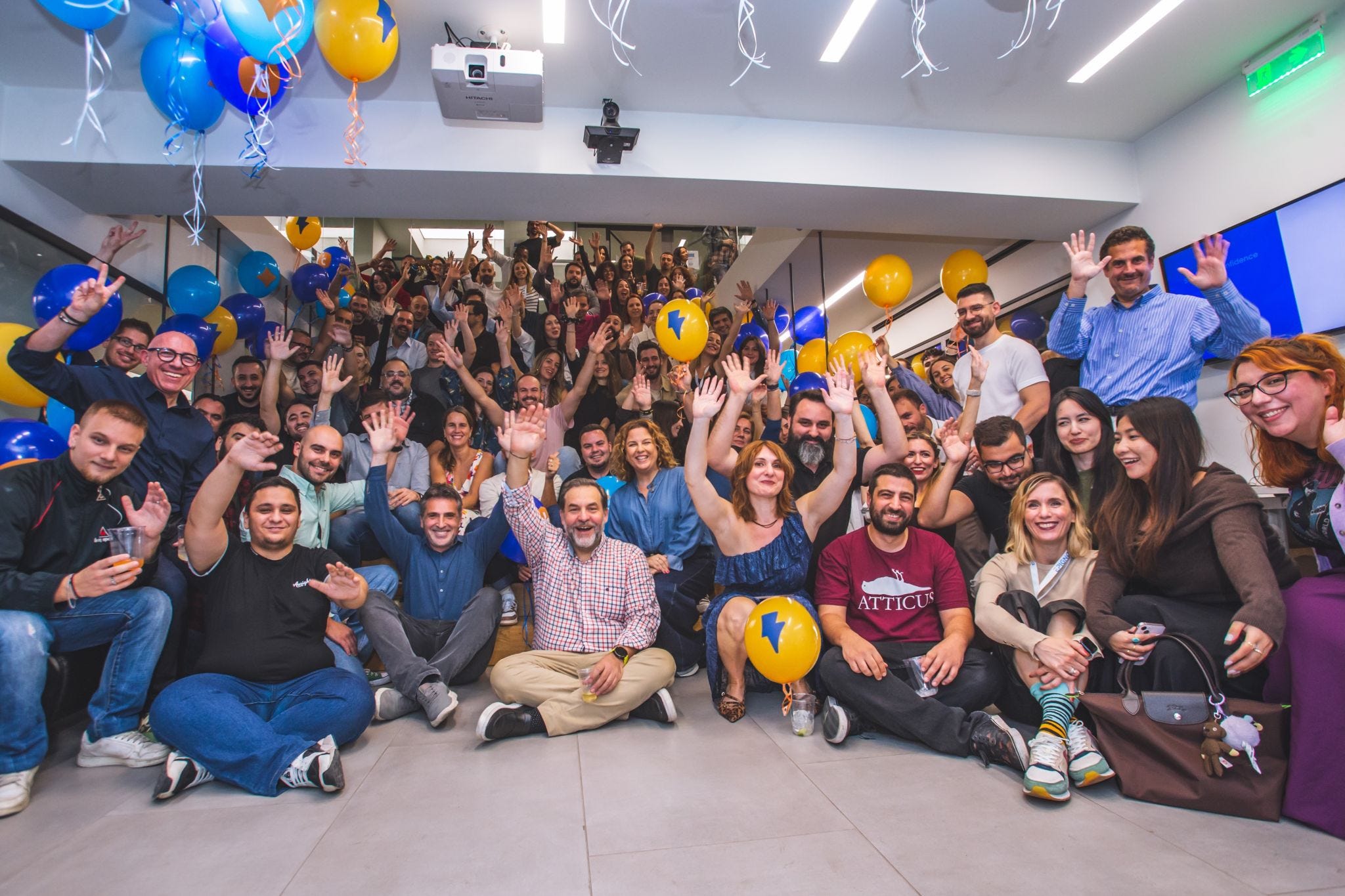
Thanos: We’re 270 people, operating globally across multiple industries. Most of our customers are U.S.-based companies with 100–500 employees that need ongoing corporate training, such as onboarding, compliance, partner and customer training. They want something simple, fast, easy, and affordable.
The next phase of growth is AI, which is both an opportunity and a threat. We’ve already launched AI features that let users generate courses and gamify learning experiences. Personalisation has been the holy grail of e-learning for 20 years. The tech just wasn’t there. Now it is. AI lets us adapt content in real time: shorter, longer, more visual, more interactive, depending on the learner.
The bigger question is whether SaaS remains the dominant model. Look at Adobe or Salesforce valuations. Investors are questioning whether traditional SaaS will capture the next wave of value. Anthropic, OpenAI, and Google are collectively investing trillions. They won’t stay in infrastructure forever. I expect them to move up the stack and build vertical solutions in large markets. No one really knows how this plays out over the next three to five years.
Alex: You stepped down as CEO in late 2023. A professional CEO came in, then your co-founder, Dimitris, returned. How has your role evolved?
Thanos: When I stepped down, we brought in a CEO with experience with bigger, high-growth companies. I stayed on in an advisory role with a small team. It didn’t work out as expected, and we had to change course. Dimitris returned as CEO. I’m more involved again. Not full-time, but I hold a C-level role, sit on the board, and participate in key decisions.
Alex: What’s your take on the founder vs professional CEO debate?
Thanos: At some point, the transition is necessary for the company to survive in the long term. I don’t believe in founder-driven companies forever. But founders need to prepare their successors internally. The best leaders build companies that can function without them. Not because they’re irrelevant, but because they’ve built strong systems and strong people.
When we discussed my succession, I strongly believed it should be someone internal, someone who knew the culture. Even if they weren’t “perfect.” We chose an external CEO. He wasn’t bad, just not the right fit. Bringing in someone unknown and handing them the steering wheel carries enormous cultural risk. For us, culture was the breaking point. Founders must build their replacements. Especially in mature companies.
Alex: You’ve been angel investing for the past few years. How’s it being on the other side of the table?
Thanos: Since 2018, I’ve invested through VC funds and directly in more than 20 startups. It’s been an expensive education. Angel investing is a long-term game where, if you’re doing it purely for financial returns, it’s often hard to justify the ROI. Liquidity takes a lot of time, if it ever reaches that point.
However, I’m not in it just for the money. I’m in it to contribute to the ecosystem, to meet ambitious founders early, to help where I can. That changes the equation. That said, I’d love to see more Greek startups break out of escape velocity and become durable, mature businesses. There’s more capital available today than ever before, but we’re not seeing enough founders push all the way through to scale.
The big success stories of the 2010s didn’t spawn the second wave many of us expected. Instead, what we’re seeing, which is positive, is Greeks returning after years abroad in tech hubs, bringing experience and perspective back home to start companies. That’s healthy.
Still, we have a structural constraint: Greece is a small market. If you’re building for Greece, you’re building small. Founders here need a global mindset from day one. If you can’t win in the U.S., it’s almost impossible to build something truly large in today’s world. That’s just the reality of software.
We have exceptional engineering talent. What we don’t have, at least not yet at scale, is deep expertise in enterprise sales. Selling multi-million-dollar contracts into Fortune 500 companies is a different muscle. And it’s one we haven’t fully developed as an ecosystem.
The next decade will belong to founders who combine product understanding, technical depth and global commercial ambition. That’s the opportunity.
Alex: Thanks a ton, Thano, that was fantastic!
Top News
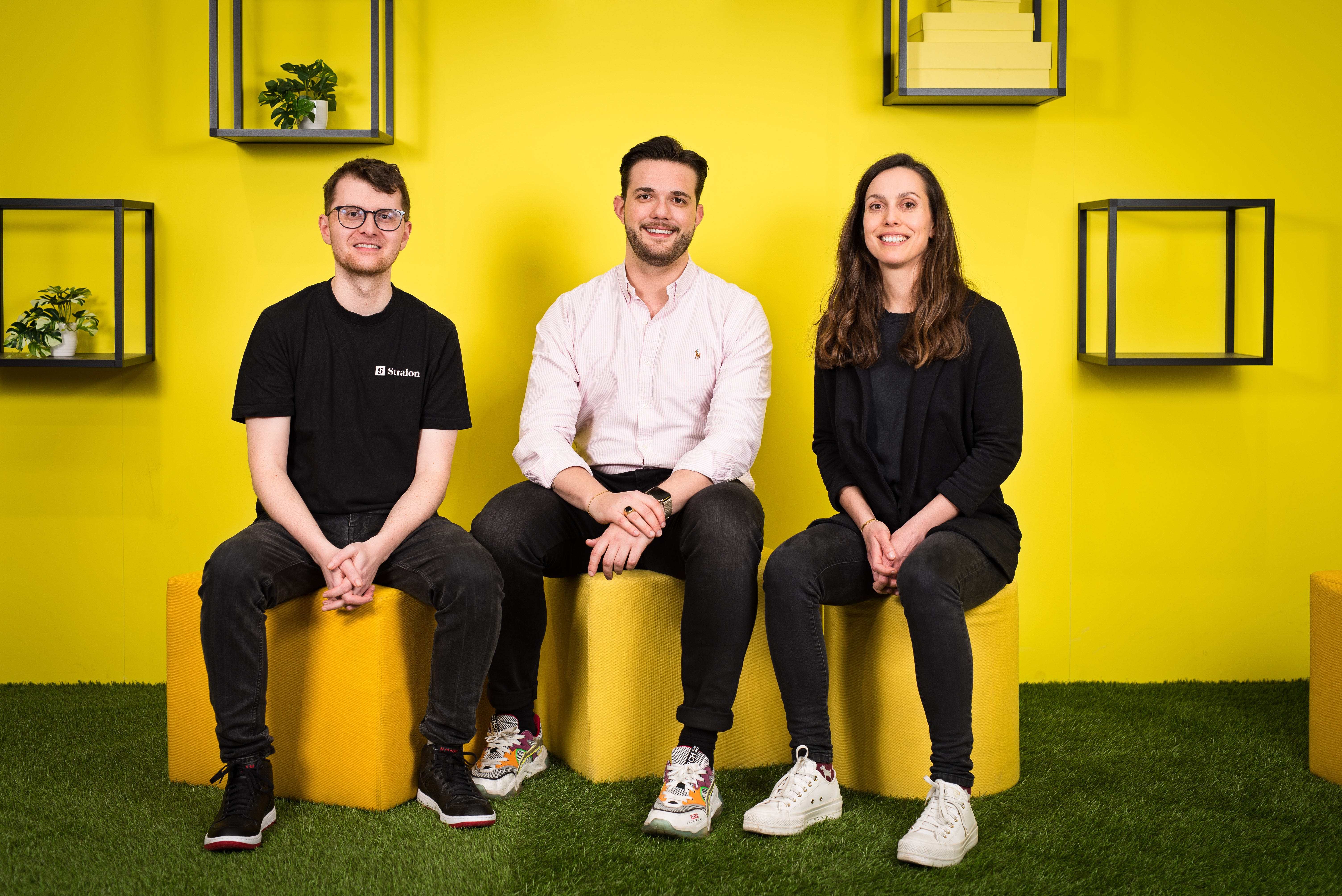
We invested in Straion to help enterprises build with AI coding agents.
Coding agents promised to make developers 10x faster, but many teams are discovering the limits. These systems often ignore internal standards, learn the wrong rules from scattered documentation, and require constant manual correction.
Founded by Lukas, Fabian, and Katrin (ex Dynatrace, Elastic), Straion is building a missing layer in the stack: an AI-powered platform that teaches AI how to write code according to your organisation’s rules.
The platform turns static, outdated documentation into active, machine-readable guardrails, validating an AI’s plan before a single line of code is committed. In practice, it acts as an organisation’s “engineering DNA,” ensuring every piece of code — human or machine — is compliant, secure, and resilient by design.
We led Straion’s €1.1M Seed round with Marathon Venture Capital. The future of software is autonomous, but only if it’s governed.
Largest AI semiconductor funding round in Europe
Last week, Axelera AI announced a $250M+ round, bringing the AI chip company’s total funding to $450M. According to the company, this marks the largest funding round ever for a European AI chip startup. Axelera focuses on running AI models at the edge. While much inference still happens in the cloud, it can also run locally on devices like smartphones or security cameras. The company’s chips are built specifically for these use cases, helping reduce reliance on large GPU-powered data centres. I previously wrote about Axelera in “The Next Wave of AI Computing” and had one of its co-founders, Ioannis Koltsidas, as a guest.
Reflection AI eyeing a $20B valuation
Reflection AI is one of the hottest AI companies right now. A team that helped build some of the most breakthrough AI applications of the past decade, with leading research in Large Language Models and Reinforcement Learning, is now reportedly eyeing a $20B valuation in a new funding round, according to the Financial Times, to build open foundation models. Its co-founder, Ioannis Antonoglou, joined Startup Pirate a year ago to discuss “The Road to Superintelligence.”
Open Coffee Athens on Friday, March 20
Come join us at Benaki Museum and hear from Angelos Tsereklas Zafeirakis (SOTIRIA Technology), Eleftherios Karabatsakis (PlugSecure), Alexandros Christodoulakis & Konstantinos Faliagkas (Wealthyhood). RSVP here.
Join a Startup
Greece-based job opportunities you might find interesting:
Axelera AI (AI semiconductors): VP Operations
Kyma (healthcare): Founding Designer
Electryone AI (energy tech): Lead Designer (First Design Hire)
Yodeck (digital signage): VP Sales
Plum (fintech): People Ops Partner
Fundings
Neara announced an A$90M Series D led by TCV to expand its digital twin modelling solutions for critical infrastructure.
Next-generation fuels technology company LanzaJet raised $47M in a round led by IAG and Shell.
Investing app Wealthyhood secured €6M in a Series A led by Bank of Cyprus, with participation from Genesis Ventures.
AI imaging technology company and Oxford spinout Brainomix extended its Series C with a new £4.8M investment.
Tacit, a UCL spin-off, secured funding from Haatch Ventures and Corallia Ventures to develop AI-powered digital twins for smart buildings.
Energy management platform for small-scale energy resources, Optimems, raised funding from TECS Capital and Helidoni Group.
Acquisitions
Ticketing platform More gr was acquired (majority stake) by Alter Ego Media for €20M.
Cloud distributor Interworks was acquired by global IT company Climb Global Solutions (NASDAQ:CLMB) for €8M.
Maritime technology solutions MTIS was acquired by technology group QnR (ATHEX: QUAL).
That’s a wrap, thank you for reading! If you liked it, give it a 👍 and share.
Alex