
Rebuild How Medicines are Made
Helping pharma deliver breakthrough therapies faster
This is Startup Pirate #127, a newsletter about technology, entrepreneurship, and startups. Made in Greece. If you’re not a subscriber, click the button below and come aboard:
Rebuild How Medicines are Made
Everyone’s fixated on gen AI and LLMs for drug discovery, with the Isomorphics and Recursions of the world, but there’s a $60B/year problem modern tech mostly ignores: turning a promising molecule into a manufacturable product—a pill or injectable that’s safe, consistent, and scalable.
Once a drug candidate is identified, i.e., a specific molecule with sufficient early safety/efficacy to justify preclinical and then human trials, the real grind starts: how do you define the ingredients, equipment, and steps that will pass regulatory scrutiny and run drug production at scale?
I first met Harry Christodoulou in January 2024, just after he left GlaxoSmithKline (GSK) in London, where he helped cut months from blockbuster approvals and save hundreds of millions in development costs. A chemical engineer (Aristotle University of Thessaloniki, UCL), he designed the recipes behind drug production, securing quality and reproducibility from preclinical through early manufacturing.
In practice, this process starts long before testing in humans, when vital feasibility, iterative testing, and drug safety data are collected, typically in a lab (in vitro) and in animals (in vivo), through tech-transfer to the manufacturing plant, supply-chain build-out, and post-approval commitments. This work isn’t a footnote; it’s a quarter of pharma’s timelines and budgets—about 25% of total R&D, or $650M per new drug. Multiply that by ~50 approvals a year and 1,000 programs entering the clinic, and you get a $60B annual market hiding in plain sight.
“This is the 21st century, and we’re still building billion-dollar drugs on the equivalent of sticky notes and whiteboards: slow, manual wet-lab experimentation, driven by scientists’ tacit knowledge”, Christodoulou told me. We discuss AGI, but life-changing medicines are mostly built on mixing, measuring, heating, cooling, or otherwise manipulating matter in a lab.
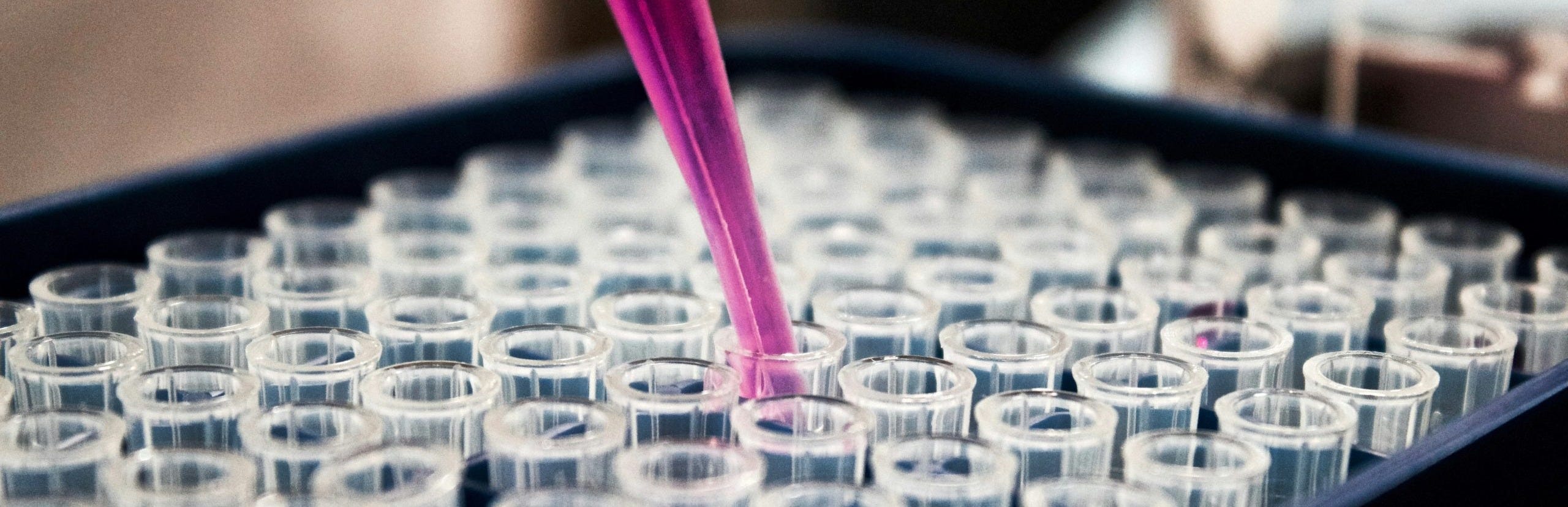
Pharma’s caution is warranted—safety takes time and data—but the tooling hasn’t kept up. Teams nurture breakthrough molecules only to stall at the next gate: dozens to hundreds of wet-lab iterations (each taking days or weeks), disjointed spreadsheets, tribal knowledge, and early-2000s software that make critical decisions slower and riskier than they need to be.
The cost? Years added to development timelines. Millions in unnecessary spending. Delayed access to life-changing medicines for patients!

Frustrated by the lack of digital workflows, Christodoulou co-founded PolyModels Hub with Antonio Benedetti (also ex-GSK) and Antonio Yankey. A few months in, we funded their Seed round with Marathon. Over the last 18 months, the trio and a 20+ person team (alumni of AstraZeneca, Eli Lilly, J&J, Amazon) across London and Thessaloniki built ModelFlow, the company’s scientific intelligence platform that plugs into existing data and lets scientists model processes with AI and physics, supporting decisions from the lab bench to the boardroom.
Think of ModelFlow as the digital backbone for drug development: a unified layer spanning preclinical to commercial manufacturing with consistency, scientific rigour, and automation. Design, test, and improve workflows faster with fewer physical experiments involving liquids, chemicals, and biological matter, simulate processes, explore scenarios, and make data-driven calls. In short: turn pharma scientists into super scientists.
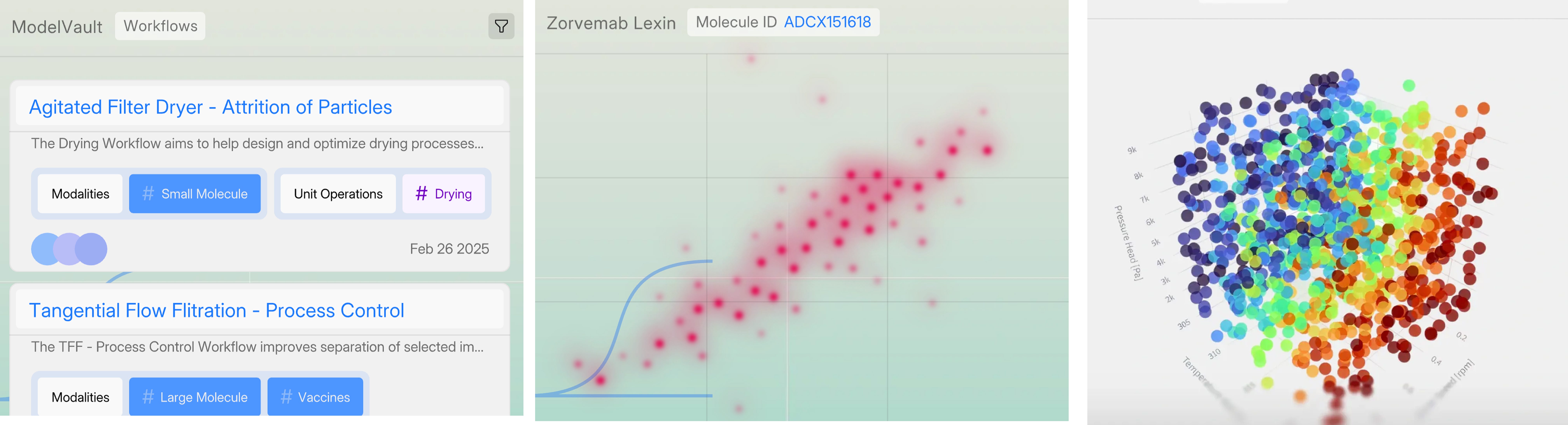
The market is noticing. In under two years, PolyModels Hub has become a must-have for bringing new medicines to market, trusted by five of the world’s top 20 pharma across multiple blockbuster programs. Early deployments show >90% fewer required experiments, saving time, hundreds of millions per drug, and improving the odds of better medicines. Sanofi and AstraZeneca recently presented joint work with PolyModels Hub at the world’s largest chemical engineering conference in Boston, Massachusetts.
They didn’t land those logos by accident. PolyModels Hub is pairing full-scale ModelFlow deployments (spanning multiple types of molecules and workflows with six-figure base licenses) with a forward-deployed team of chemical engineers (PhDs and ex-pharma scientists) who sit alongside customers, map real business processes, and use the platform to tackle the highest-value development bottlenecks.
Last month, the company announced a $9M Series A by Molten Ventures (backers of Revolut, UiPath, Wise) and Marathon, aiming to build the leading life-sciences enterprise for digital drug development. “We believe that in 5–10 years, no serious biotech or pharma will develop new products without our platform at the centre of their R&D,” Christodoulou told me.
PolyModels Hub is quickly establishing itself as the critical enabler of modern drug development. The best of pharma still runs on archaic processes. Outdated, manual wet-lab experiments can take days, weeks, or even months to complete, delaying patients’ access to life-changing medicines. There is a monumental opportunity to lead this industry, and PolyModels Hub has come along at precisely the right moment.
Top News
Greek AI mafia is real (cont’d)
The data keeps stacking up: a few weeks ago at NeurIPS, the world’s top AI conference, 6% of the oral papers featured a Greek co-author, with a strong showing of Greek researchers in San Diego; mostly NTUA grads. This is remarkable given that Greece and Cyprus have less than 0.2% of the world's population. Couple this with the fact that some of the hottest frontier AI businesses out there, like Reflection AI or Runway, trace back to this cohort, and you get why I’ve been banging this drum for a while (here and here). The Greek AI mafia is real.
AUTH’s Photonics helped power Celestial AI’s $5.5B exit
It’s no secret that Aristotle University of Thessaloniki has a world-class photonics research team (the use of light/photons to generate, guide, and detect signals for computing, sensing, and communications). What’s perhaps lesser-known is that a 2019 paper by AUTH’s WinPhoS research group on photonic computing caught the eye of Silicon Valley’s Celestial AI, which led to a local R&D team, multi-year prototype work, and, this fall, the company’s $5.5B acquisition by Marvell.
Mistral AI sets foot in Greece
Mistral AI, the French LLM unicorn valued at $14B+, is planting an AI team in Athens via a partnership with NTUA. As part of the rollout, the Ministry of Digital Governance will tap Mistral’s open-weight models to modernise government workflows, signalling a faster path to AI in the public sector.
Join a Startup
Greece-based job opportunities you might find interesting:
SMPnet (energy): Linux Edge Systems Engineer
Blueground (proptech): Software Engineering Internship
HealthBook+ (healthtech): Founding Lead Software Engineer
Crates (music app): iOS Engineer (Founding Member)
Wikifarmer (agtech marketplace): Product Manager
Fundings
Infinite Orbits raises €40M to get its flagship on-orbit servicing spacecraft to first missions; contracts already signed with the French MoD and US Air Force. I previously interviewed the founder, Manos Koumandakis, and chatted about the growth of the space economy.
Biocentis lands $19M to develop genetic insect-control tech targeting disease-carrying and crop-damaging species.
BuildCheck secures $5.9M Seed for an AI construction design review platform that flags errors before they hit the site.
Sprinter raises $5.2M Seed led by Robot Ventures to upgrade blockchain solver infrastructure, off-chain bots and market-makers that execute on-chain for users.
Isidor picks up $3.6M Pre-Seed from Gradient Ventures, Seedcamp, and others to build frontier enterprise AI for large orgs.
Promed Bioscience closes €1.25M led by KV Fund to advance collagen-based biomaterials for regenerative medicine.
EdenCore secures €900K Seed led by UniFund to enable sustainable plant care with AI & machine vision.
Antler-backed Tyten announces a £750K round to bring AI-powered automation to global facilities management.
Caroo raises €600K from Loggerhead, Anthology, Starttech and HeBAN for its car-sharing platform.
Metalease raises funding from Elbridge Capital to scale IT equipment leasing for businesses.
Superbo receives investment from Deep Capital Group to streamline enterprise ops with AI agents.
Exits
MANUAL acquires FORMEL SKIN, Germany’s largest digital dermatology provider, expanding MANUAL’s healthtech stack from men’s health into full-funnel virtual derm care across the DACH market.
Science Card, a university card platform dedicated to simplifying university research finance, was acquired by Zebec Network, a Solana-based blockchain payment network.
Defence tech Resilience Tech acquires drone company Flybot.
New Funds
The Flywheel launches a venture studio dedicated to building Industrial AI startups for manufacturing, defence, and energy.
Investing For Purpose launches with €25.4M to invest in purpose-driven founders and ventures in Greece and the region.
That’s all for this week. Tap the heart ❤️ below if you liked this piece. It helps me understand which themes you like best and what I should do more.
Find me on LinkedIn or X. Thank you for reading.
Alex
Love how this frames the entire pharma manufacturing problem through actual cost numbers like $650M per drug. The ModelFlow approach is dunno if people realize how big a deal it is when you can reduce physical experiments by >90%. I've seen teams in biotech burn through months just optimizing a single formulation step, so anything that lets you simualte instead of test in real-time could genuinely change how fast breakthrough therapies reach patients. The fact that Molten Ventures backed both this and UiPath shows they really get the automation thesis across different sectors.